
Money is not a pre-political commodity like gold. It is a social and legal institution.
It exists as "that which pays" within structured systems of obligation. Its value derives from the social practice of paying, enforced by law.
Hockett identifies a cyclical evolution:
- Pre-Modern: Ledger-based credit systems
- Modern: Physical tokens (coins, bills)
- Post-Modern: Return to digital ledgers
From Ledgers to Tokens and Back
Tracing the evolution of money through Hockett's historical framework.
The Ledger Era
Money begins not as a commodity, but as a system of social credits and debts recorded on ledgers (e.g., Mesopotamian clay tablets). It is a measure of obligation, a 'social relation' made durable.
The Token Era
As trade expands beyond local trust networks, physical tokens (coins, bills) are introduced to represent ledger entries. This creates the 'commodity illusion'—that the token itself is money, rather than the credit it represents.
Return to Ledgers
Digital technology allows us to return to the superior ledger system on a global scale. Central Bank Digital Currencies (CBDCs) and 'The Citizens' Ledger' restore the direct relationship between the public and their money, bypassing private rent-seekers.
Myth vs. Reality
Test your understanding of the Legal Theory of Money.
What is the fundamental nature of money?
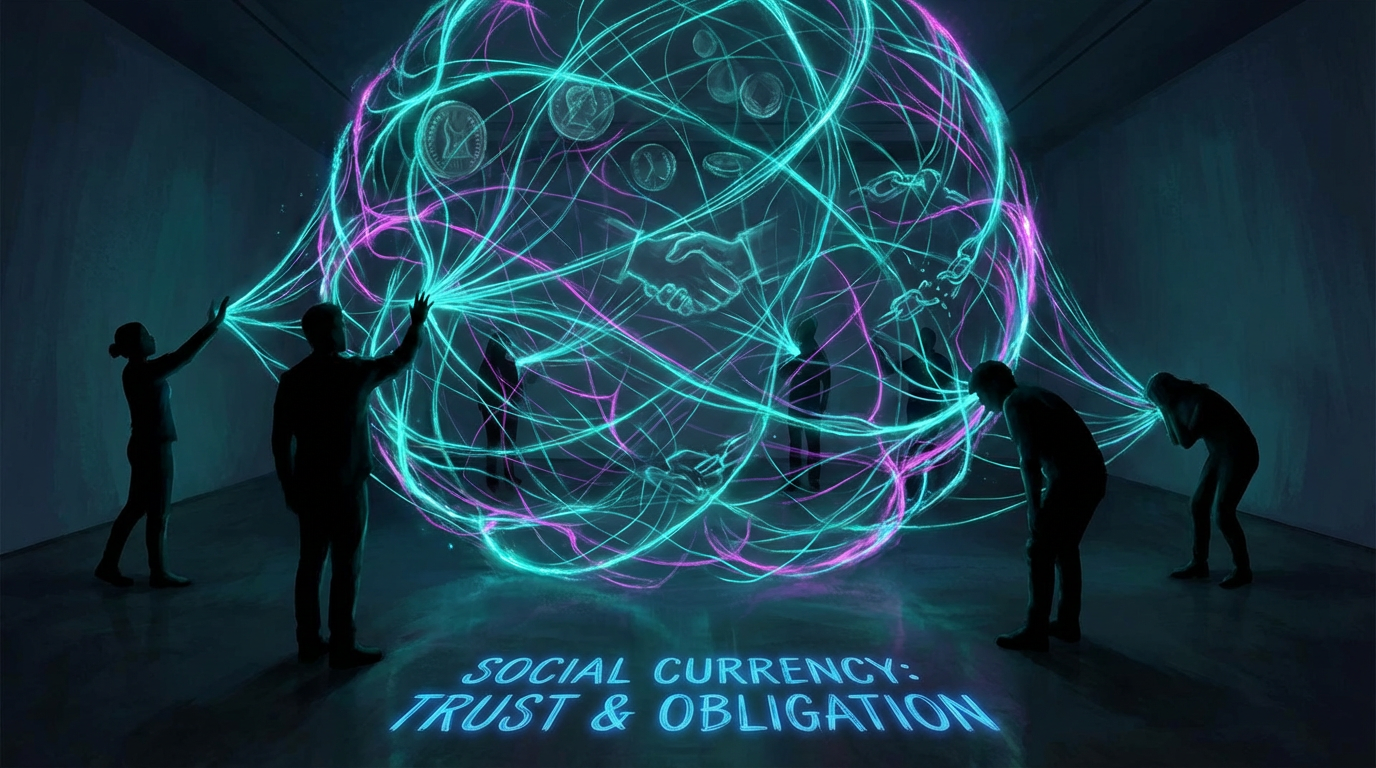
"Money emerges from a temporally extended implicit covenant that facilitates joint human agency and collective action."— Robert Hockett, Cornell Law School
Policy Implications
Understanding money as a public creature of law changes everything. It means sovereign issuers aren't revenue-constrained—they are resource-constrained.
Green New Deal
Practical application of monetary sovereignty for large-scale public investment in sustainability.
Democratizing Finance
Using the public nature of money to ensure financial systems serve the public good, not just private accumulation.
Join the Monetary Reformation
Get updates on Robert Hockett's latest research, public speaking events, and policy proposals delivered to your inbox.
Key Terminology
Seigniorage
The profit made by a government by issuing currency, specifically the difference between the face value of coins/notes and their production cost.
Endogenous Money
The theory that money is created internally within the economic system by commercial banks extending credit, rather than being fixed by a central bank.
Fiscal Treasury
The government department responsible for managing public revenue, expenditure, and debt—acting as the primary issuer of sovereign obligations.
Chartalism
A monetary theory arguing that money originated with state attempts to direct economic activity rather than as a spontaneous solution to barter.